Who has the money?
GitHub Check out the code on GitHubFinding wealthy people for private banking and wealth management businesses of big banks
This was a team project (team of 5) for the FoB Hackathon 2020, ML Challenge.
The Use Case
- HNIs are defined as individuals having net worth of > 5 million USD. These high profile individuals are still significant in number and are often in need of wealth management for their businesses or family offices.
- Create an AI/ML based platform to enable identification of potential prospects for Wealth Management leveraging News & Social Analytics.
- Using NLP & Clustering Techniques to identify topics of interests for a group of prospects
- Profiling the prospects using Publicly Available Social Media Data.
- Identify the Degree of Affinity of the prospects to the Trends.
The ML Motivation
- Utilize the affluence of data & soaring social footprints of wealth creators, machine learning can be the motive force to gauge Social, Cognitive, Behavioural & Cultural elements of individuals who could be our future prospects.
- Drastically reduce the manual task of identification, analysis, profiling and segmentation of the leads generated.
The Data Strategy
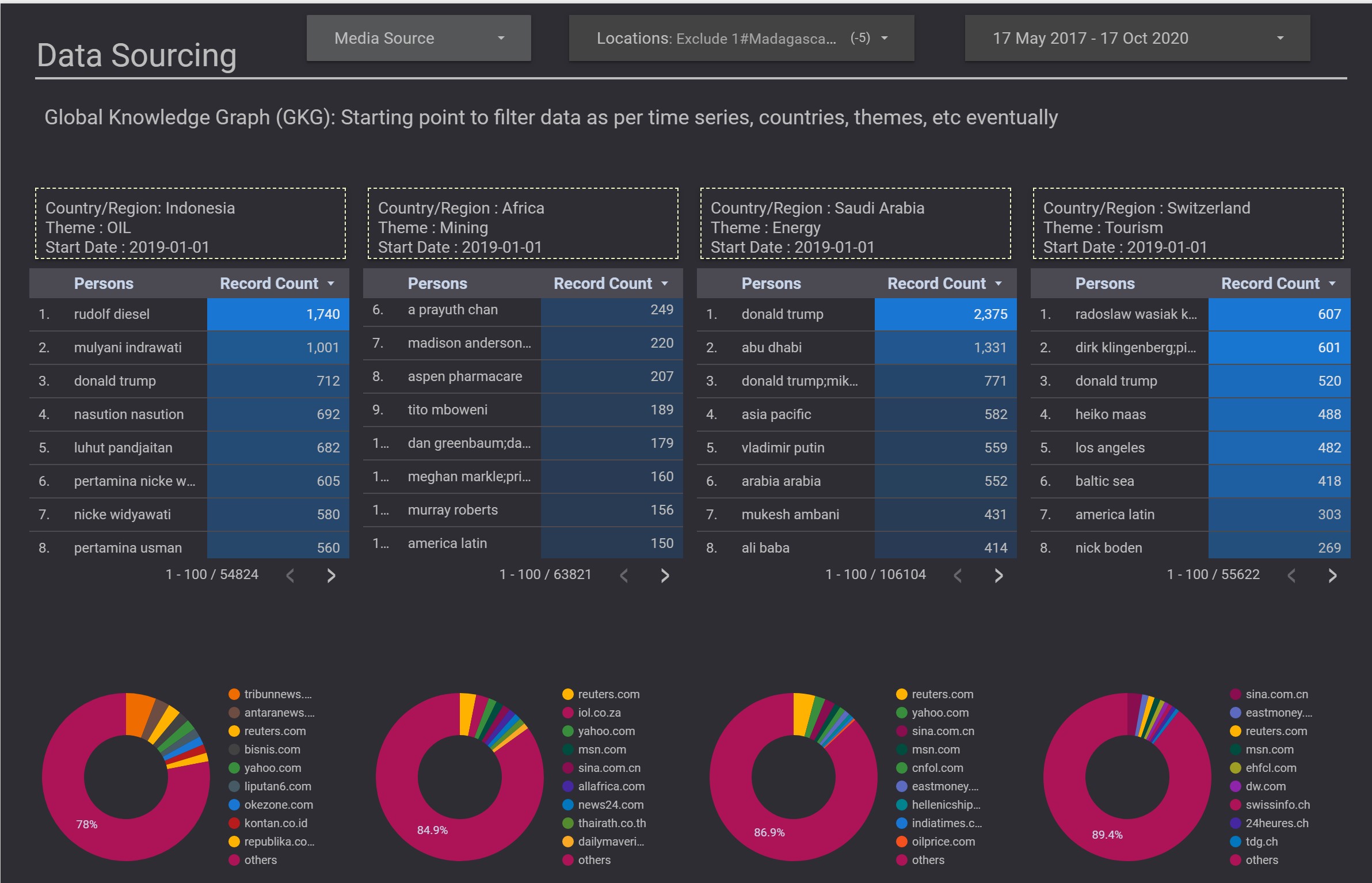
- Global Knowledge Graph (GKG): Starting point to filter data as per time series, countries, themes, etc eventually
- Data Segmentation: Confirm data metrics, data scale-up and segment variable definition. followed by Profiling and interpretation.
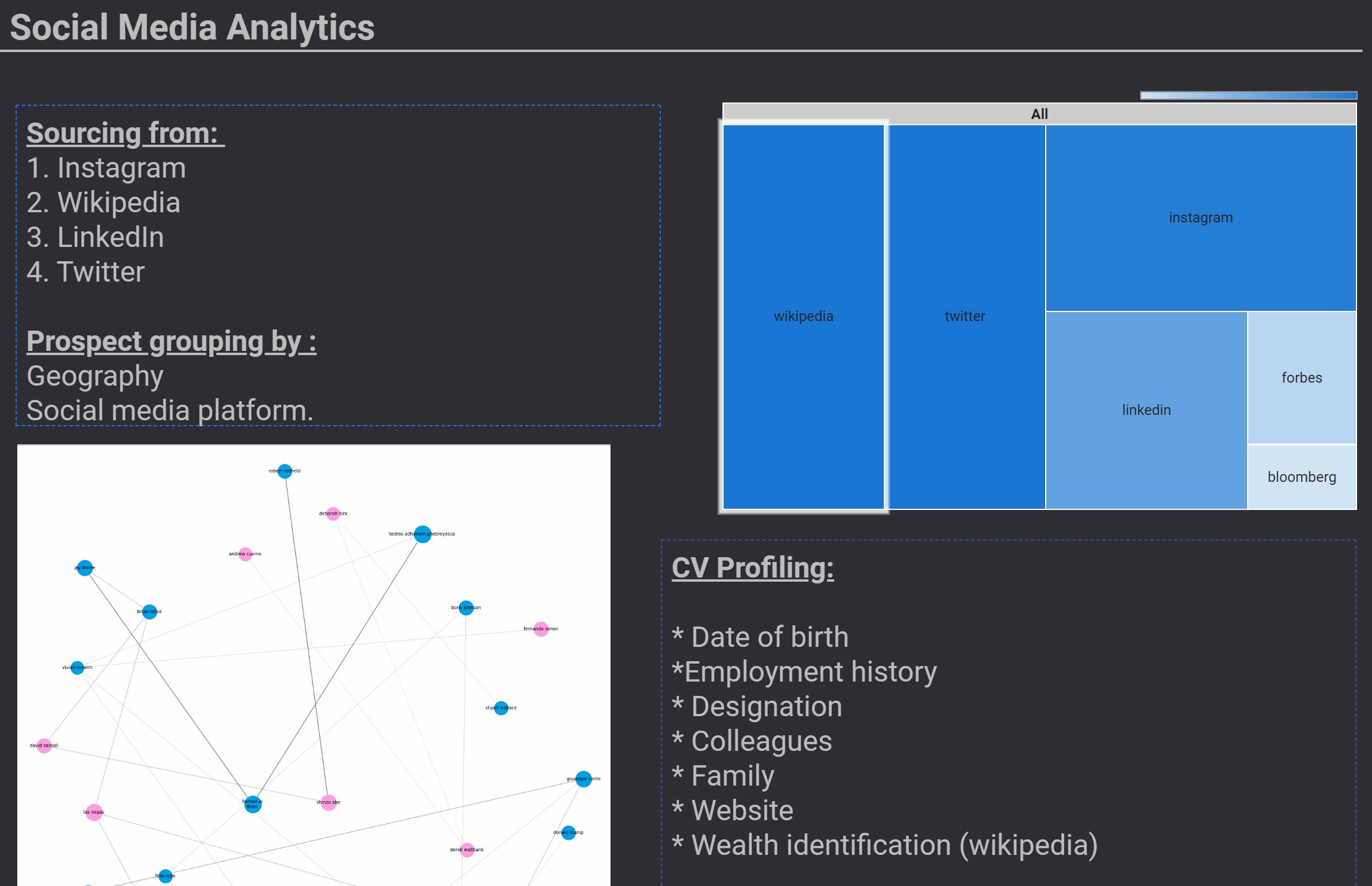
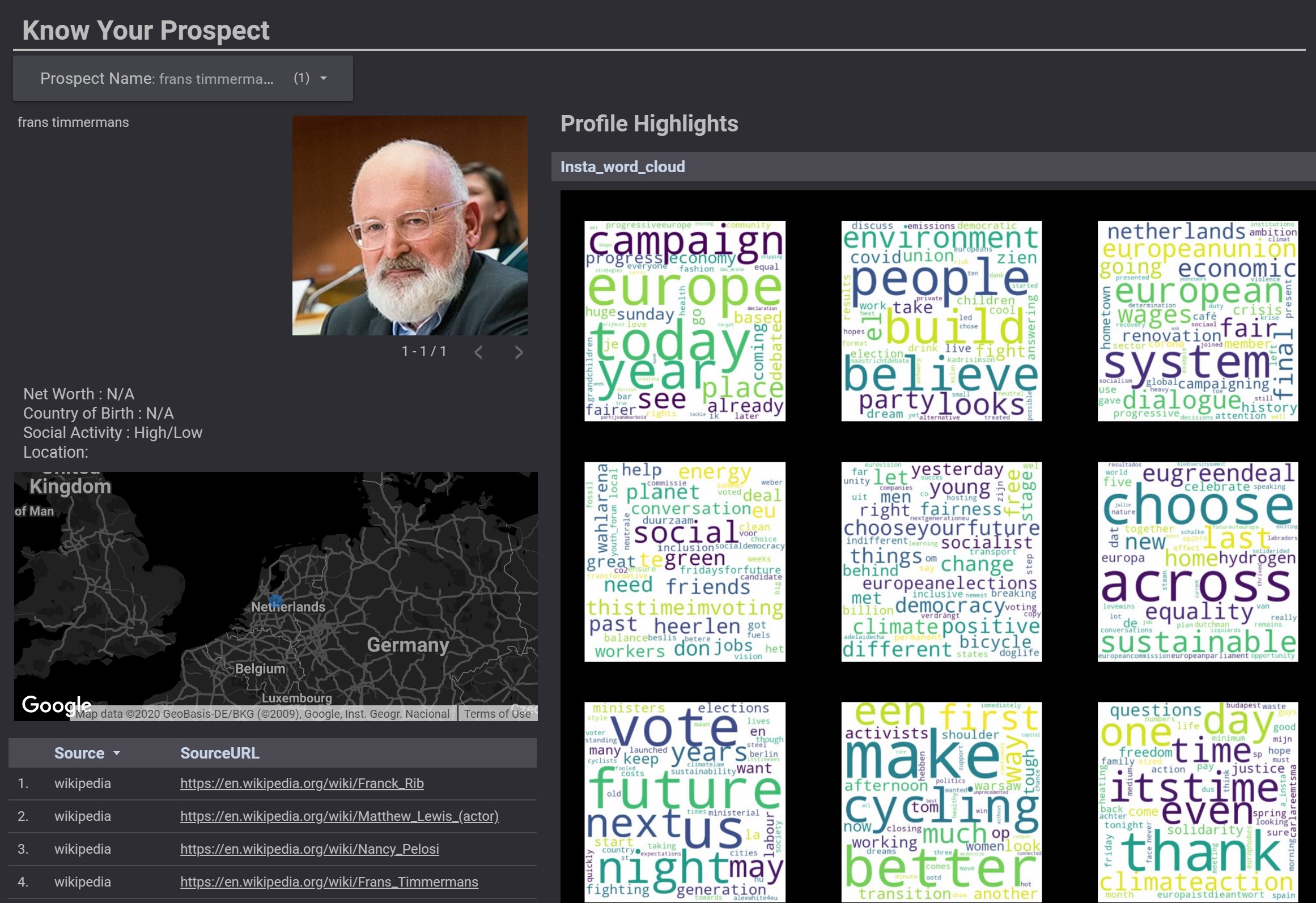
- Profiling: Building a profile map and perform social and news analytics
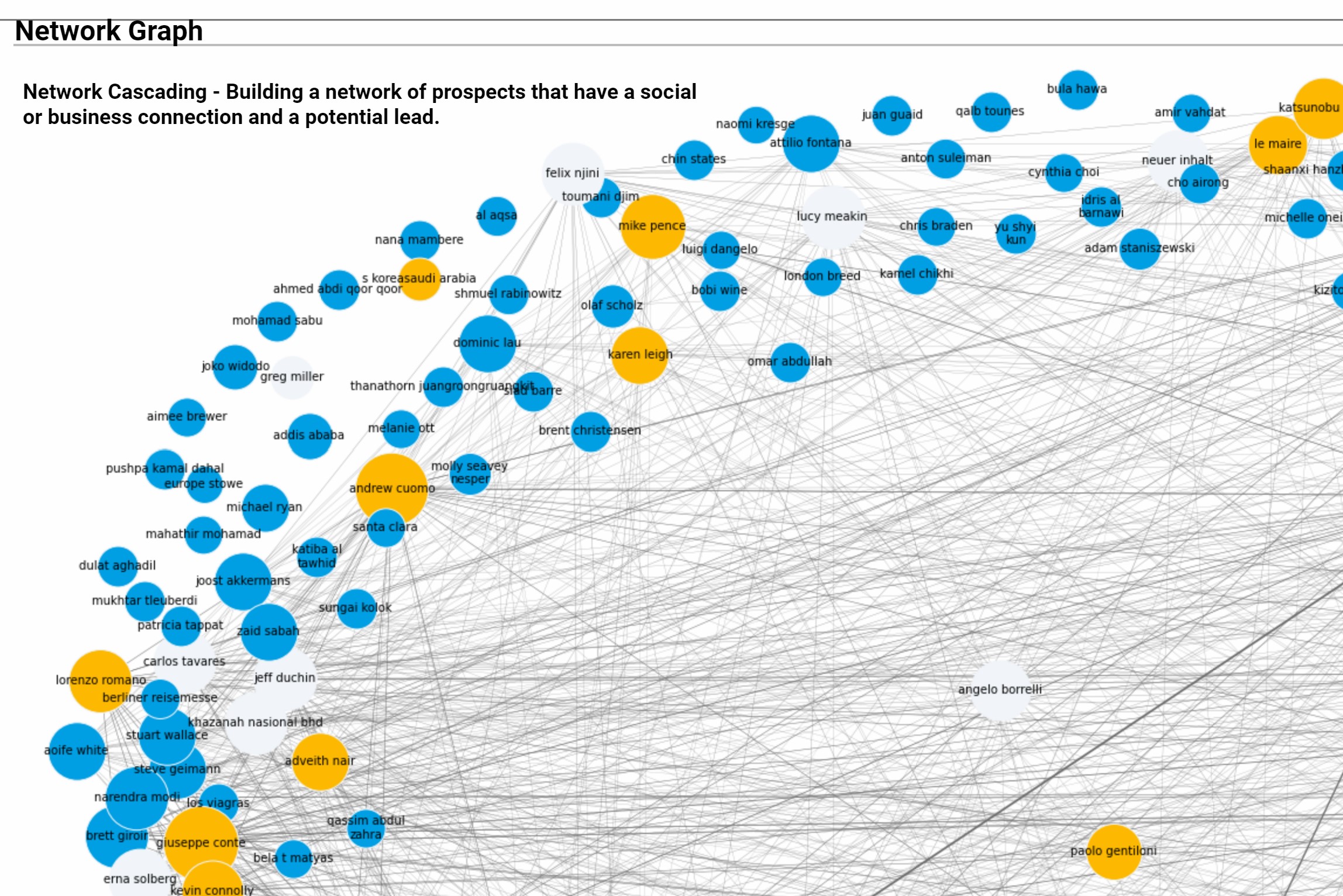
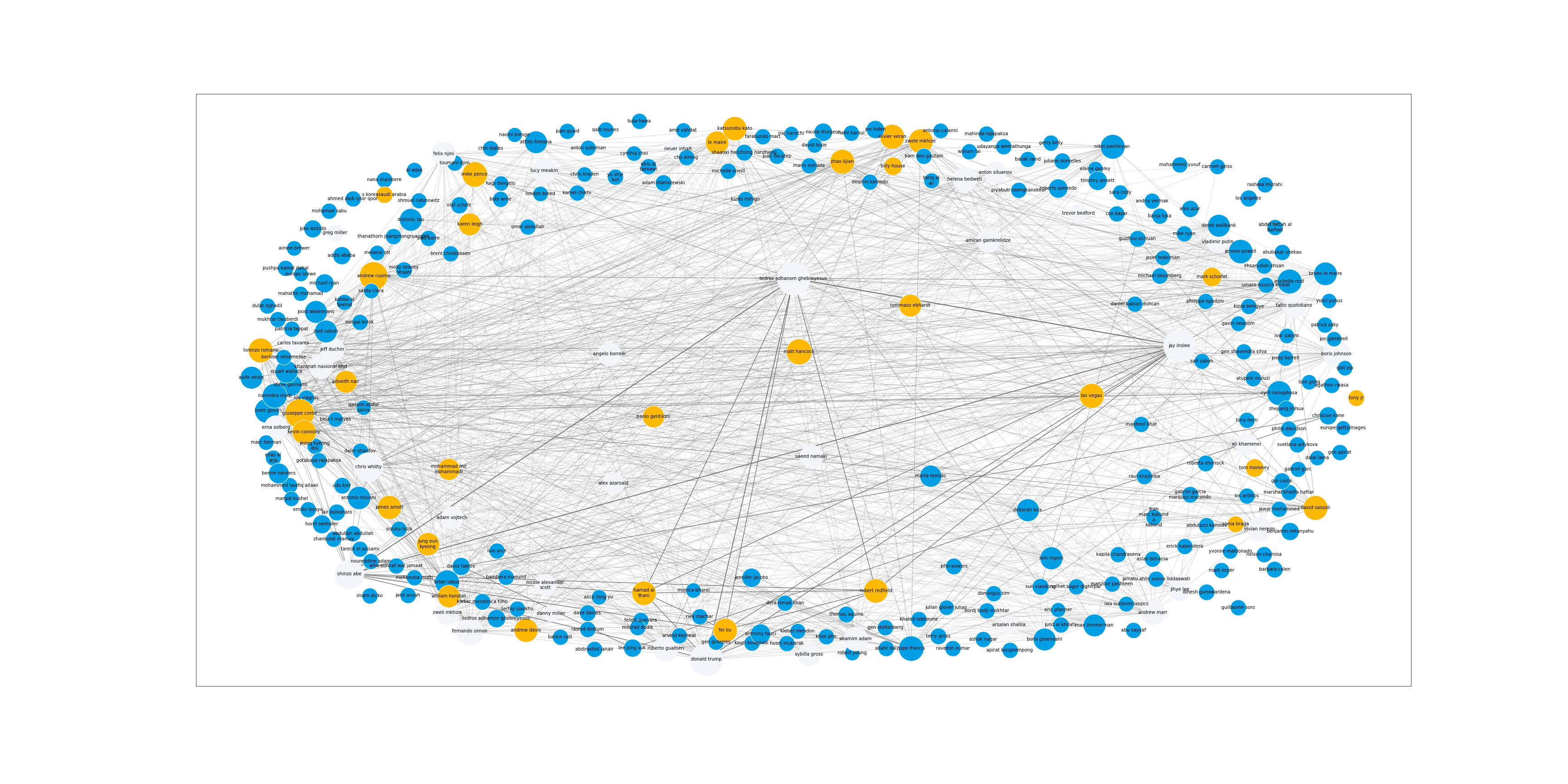
- Network Graph: Networkx – Network Cascading Algorithm to simulate link associations in the network graph of prospects that have a social or business connection and a potential lead.
- LinkedIn, Wikipedia, Twitter and Instagram were used for profiling and key-value extraction.
The ML Model
- NLP : Stop Word Removal, Tokenisation, Stemming, Lemmatisation, N-Gram Modelling, TF-IDF to find out high-frequency n-grams
- Latent Dirichlet Allocation (LDA): Generative statistical model that allowed us to use sets of observations in order to explain similar parts of data by unobserved groups thus facilitating Topic Modelling.
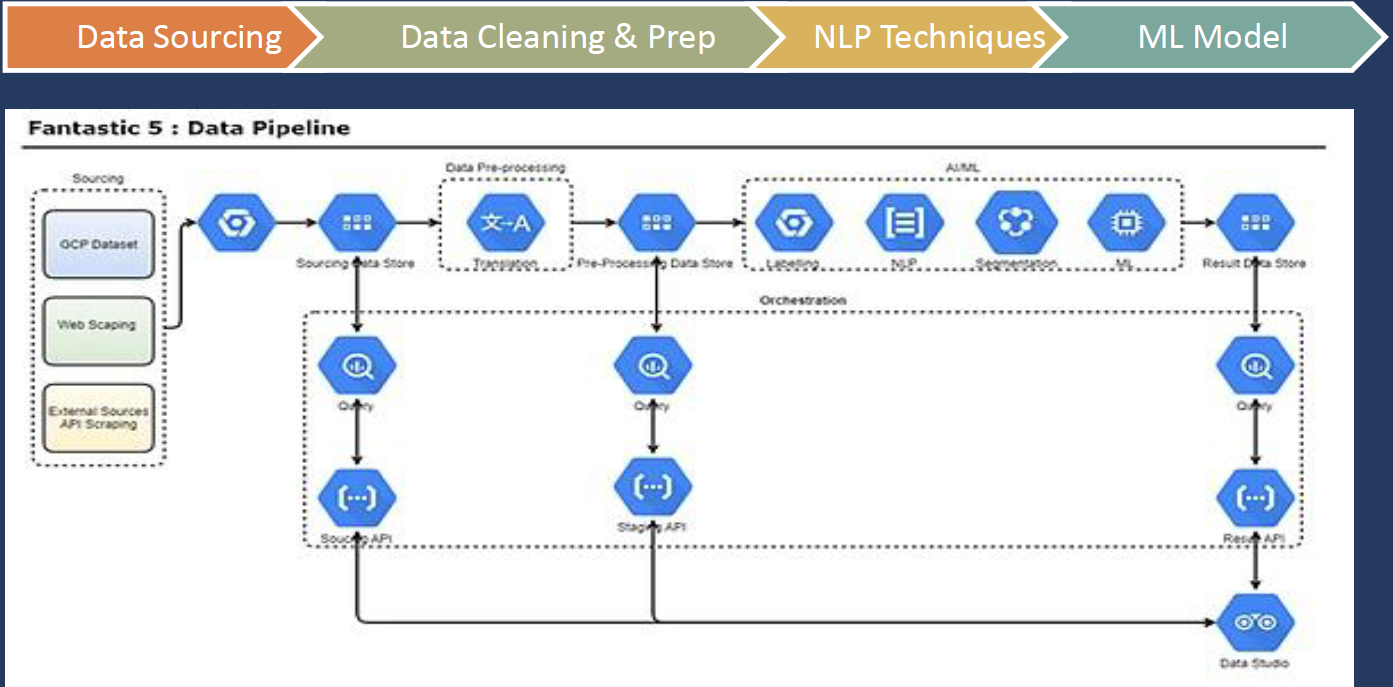
The Pipeline
Check out my other projects!🌟
I'd love to know what you thought of this